Electronic signatures are pretty much everywhere these days. It doesn’t matter whether you’re working with contracts, HR paperwork, or vendor agreements; you’re probably working with legally binding signed documents online. While speed and convenience are obvious advantages, the key question is whether electronic signatures are secure.
The short answer is yes. But it has to be done right.
eSignature solutions use encryption, identity verification, and tamper-evident audit trails to confirm the signer’s identity. This makes electronic signing much more secure than traditional paper-based processes—and helps meet security standards like UETA in the U.S.
In this article, we’ll talk about how electronic signatures work, the types of security risks you need to consider, and how a secure electronic signature platform like PandaDoc can help protect your docs from fraud, unauthorized changes, and more.
Are electronic signatures safe?
Yes, electronic signatures (eSignatures) are safe, but they must be created and managed on a secure platform that supports appropriate compliance measures.
When using proper security measures, it’s safer than a handwritten signature (also called wet signatures) on paper. This is because physical documents can be lost, altered, forged, or accessed by anyone who can get their hands on them.
An eSignature relies on digital safeguards and security features like encryption, authentication, and audit trails provide a clear record of who signed the document, when they signed it, and how.
eSigning is safe, but it also depends on the system behind the signatureSo, eSigning is safe, but this also depends on the system behind the signature itself—especially when that system uses public key infrastructure (PKI) to verify identity and ensure authenticity.—especially when that system uses public key infrastructure (PKI) to verify identity and ensure authenticity.
In the U.S., the legality of electronic signatures is backed by the ESIGN Act, which gives them the same legal weight as handwritten ones when properly implemented.
How do electronic signatures work?
Electronic signatures capture a signer’s intent to agree and then securely attach that intent to a digital document.
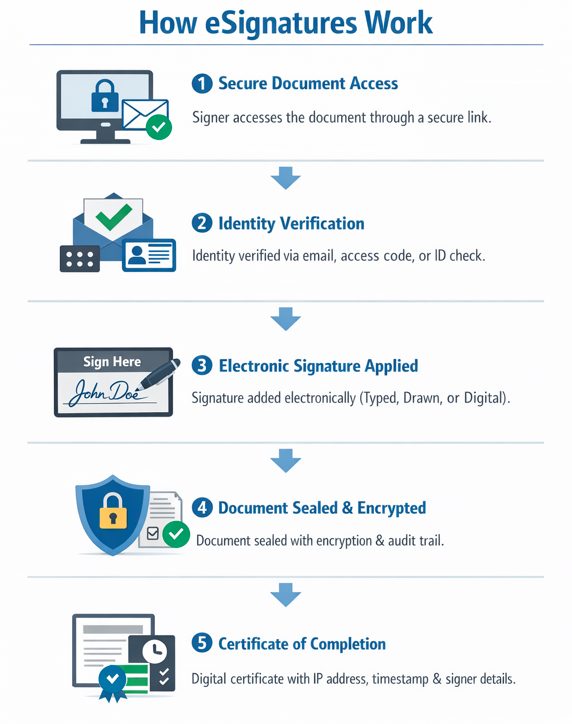
Here’s what the process could look like when you sign electronically:
- The signer accesses the document through a secure link
- Their identity is verified through methods such as email authentication, access codes, or identity checks
- The signature is applied electronically (this could be a typed name, drawn signature, or verified digital signature)
- The document is sealed with encryption and a tamper-evident audit trail
- Digital certificates of completion record key details like IP address, timestamp, and signer activity
This process creates a verifiable electronic record that is extremely difficult to change without detection. It’s one reason why eSignatures are widely adopted in workflows that need to automate approvals and reduce manual touchpoints.
Why eSignatures are more secure than other options
While paper signatures might feel familiar, they’re not actually safer. The reality is that electronic signatures have stronger security and accountability attached to them.
Here’s why:
- Tamper-evident documents: Once you sign, the electronic document is locked. So any change would invalidate the signature.
- Detailed audit trails: All actions, like viewing, signing, forwarding, etc., are logged with timestamps and IP data, so there’s no guessing.
- Encrypted storage and transmission: When you use a secure eSignature platform, documents are encrypted both in transit and at rest.
- Certificates of completion: This gives you a complete and court-admissible record of the signing process.
- Access controls: With proper permissions configured, you can limit who can view, edit, or sign a document.
Some eSignature platforms also use advanced encryption methods to meet the highest security requirements for regulated industries.
So, when you compare paper contracts that can be easily photocopied, altered, or misplaced to eSignatures that give you traceability, accountability, and cybersecurity protections…which would you choose?
Can electronic signatures be forged or tampered with?
This is a common concern, and of course, it’s a valid one: Can electronic signatures be forged?
Well, in theory, any signature can be misused. The difference is that when you use a secure electronic signature platform, attempts at forgery or tampering become far more difficult than with a handwritten signature, which can be forged with little effort.
This is why:
- Signatures are tied to verified identities and access methods
- Documents are encrypted and sealed after signing
- Any modification invalidates the signature
- Audit trails expose suspicious activity immediately
So, the real risk comes from using insecure tools like email attachments, PDFs that don’t contain tracking capabilities, or platforms that don’t have solid authentication.
Types of electronic signatures and security levels
Now let’s talk about the different types of electronic signatures, because not all have the same level of security.
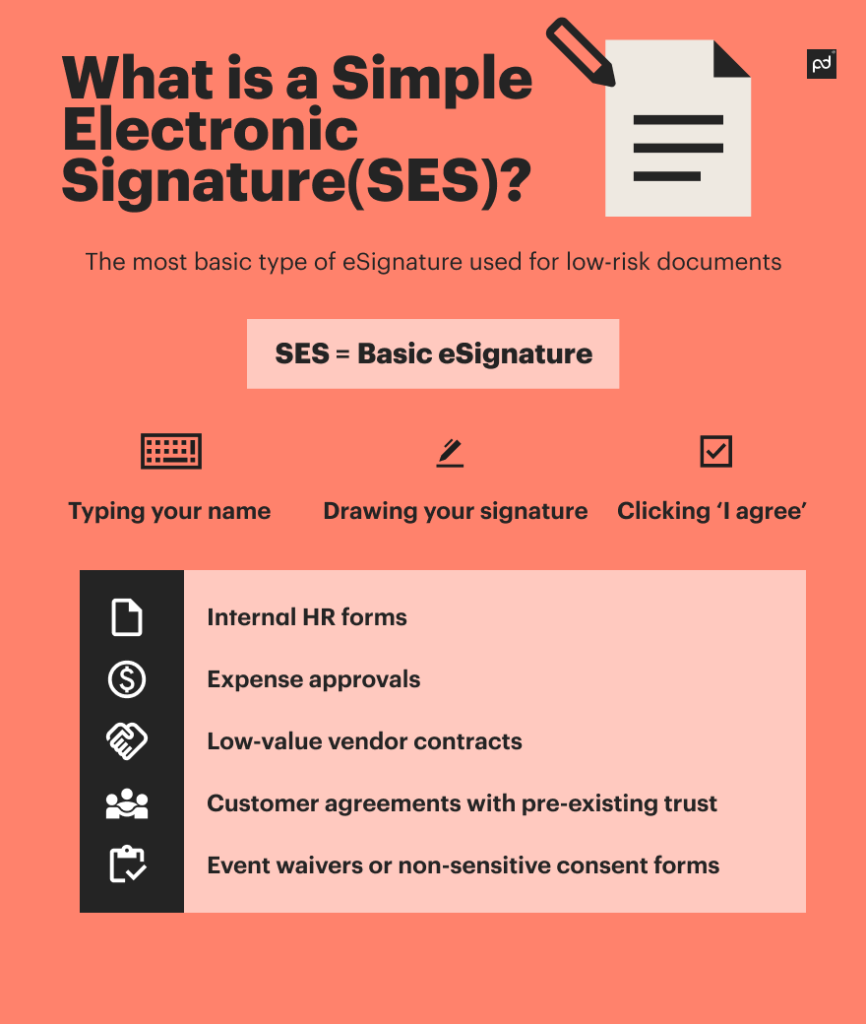
Simple electronic signatures (SES)
These might include typed names, checked boxes, or a basic click-to-sign action. SES are used more for low-risk agreements and internal approvals. Here are more
These include typed names, checked boxes, or basic click-to-sign actions. They’re commonly used for low-risk agreements and internal approvals.
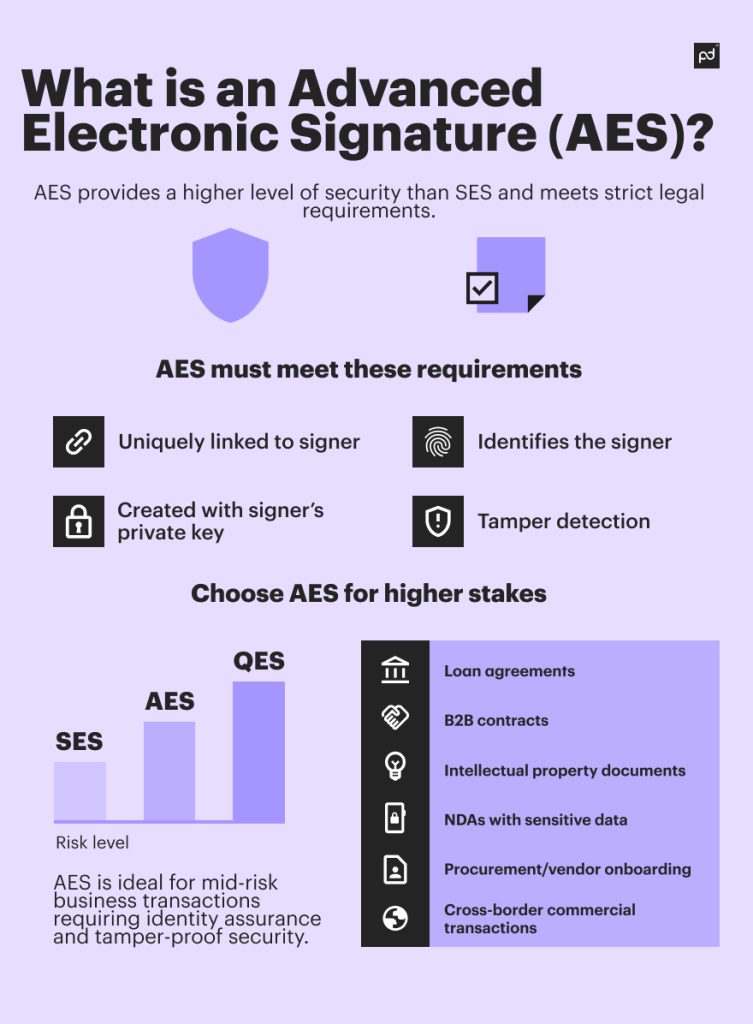
Advanced electronic signatures (AES)
Advanced electronic signatures give you even stronger identity verification than a simple signature because they are uniquely linked to the signer. They can detect tampering and are widely used for business and regulated agreements.
Qualified electronic signatures (QES)
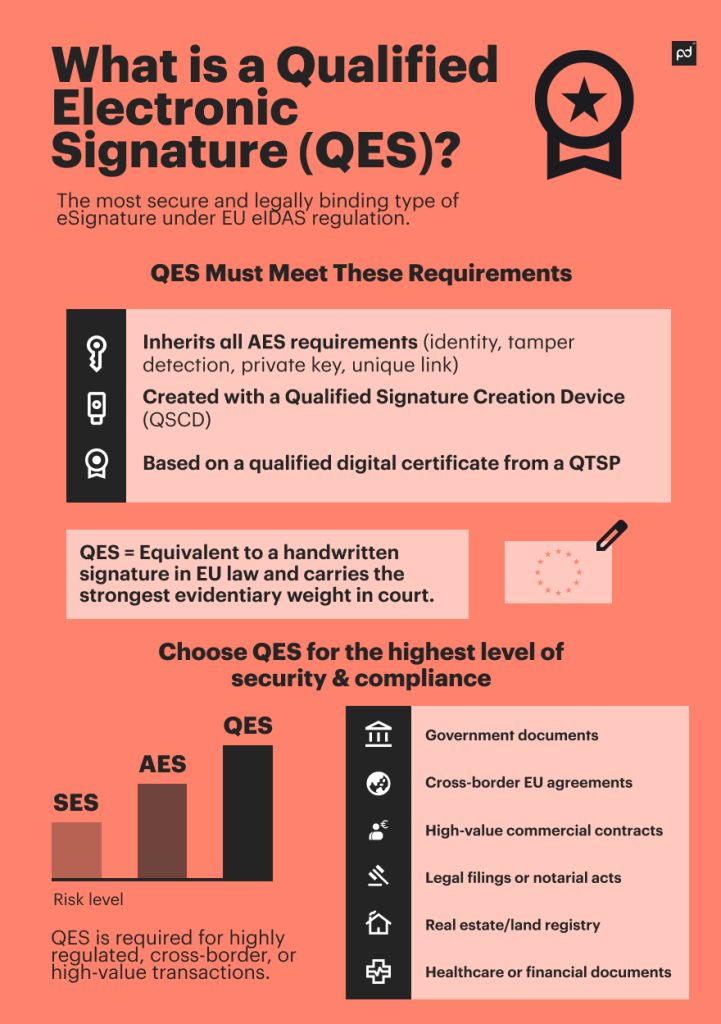
A qualified electronic signature will give you the highest level of legal and technical assurance. This is especially true when operating or serving in regions governed by eIDAS regulations. QES requires verified digital identities and qualified trust service providers.
QES offers the highest level of legal and technical assurance, especially in regions governed by eIDAS regulations. They require verified digital identities and qualified trust service providers.
Explore QES in depth:
PandaDoc security and compliance: Built for trust
Our platform is designed to help you send and sign your documents securely and at scale.
PandaDoc eSignature offers:
- Encrypted documents and secure access controls
- Tamper-evident audit trails and certificates of completion
- Security and compliance with global standards and regulations
- Advanced authentication options
- Support for qualified electronic signatures (QES)
You can also trust that your electronic signatures will be legally enforceable when you use PandaDoc. And yes, electronic signatures are legal!
Why electronic signatures are safer with PandaDoc
When you use the right platform, electronic signatures are absolutely safe. They reduce fraud, eliminate the need for manual handling, and create verifiable records that a paper signature can’t match.
Plus, PandaDoc combines eSignature technology with enterprise-grade compliance, auditability, and advanced options like QES.
Ready to find out how PandaDoc can improve your security, efficiency, and trust with eSignature software? Request your free demo today!
Frequently asked questions
-
The main drawback of electronic signatures comes from using insecure tools. If you don’t have proper authentication or audit trails, people can misuse electronic signatures. This means you have to choose a trusted platform to minimize these risks.
-
Some risks of electronic signatures include unauthorized access or identity misuse, especially if security controls are weak. Secure platforms reduce these risks through encryption, verification, and monitoring.
-
In a secure system, very little. Because digital signatures are tied to specific documents and identities, unauthorized reuse or alteration can be detected and invalidated.
-
PandaDoc eSignatures are highly secure, as they are protected by encryption, access controls, and legally recognized audit trails. Find out more about our security here.
Disclaimer
PandaDoc is not a law firm, or a substitute for an attorney or law firm. This page is not intended to and does not provide legal advice. Should you have legal questions on the validity of e-signatures or digital signatures and the enforceability thereof, please consult with an attorney or law firm. Use of PandaDoc services are governed by our Terms of Use and Privacy Policy.